Display Archive
Sphere as Earth, Moon and Mars
The building is a sphere, so its first great trick was inevitable: becoming other worlds.
The summer of worlds
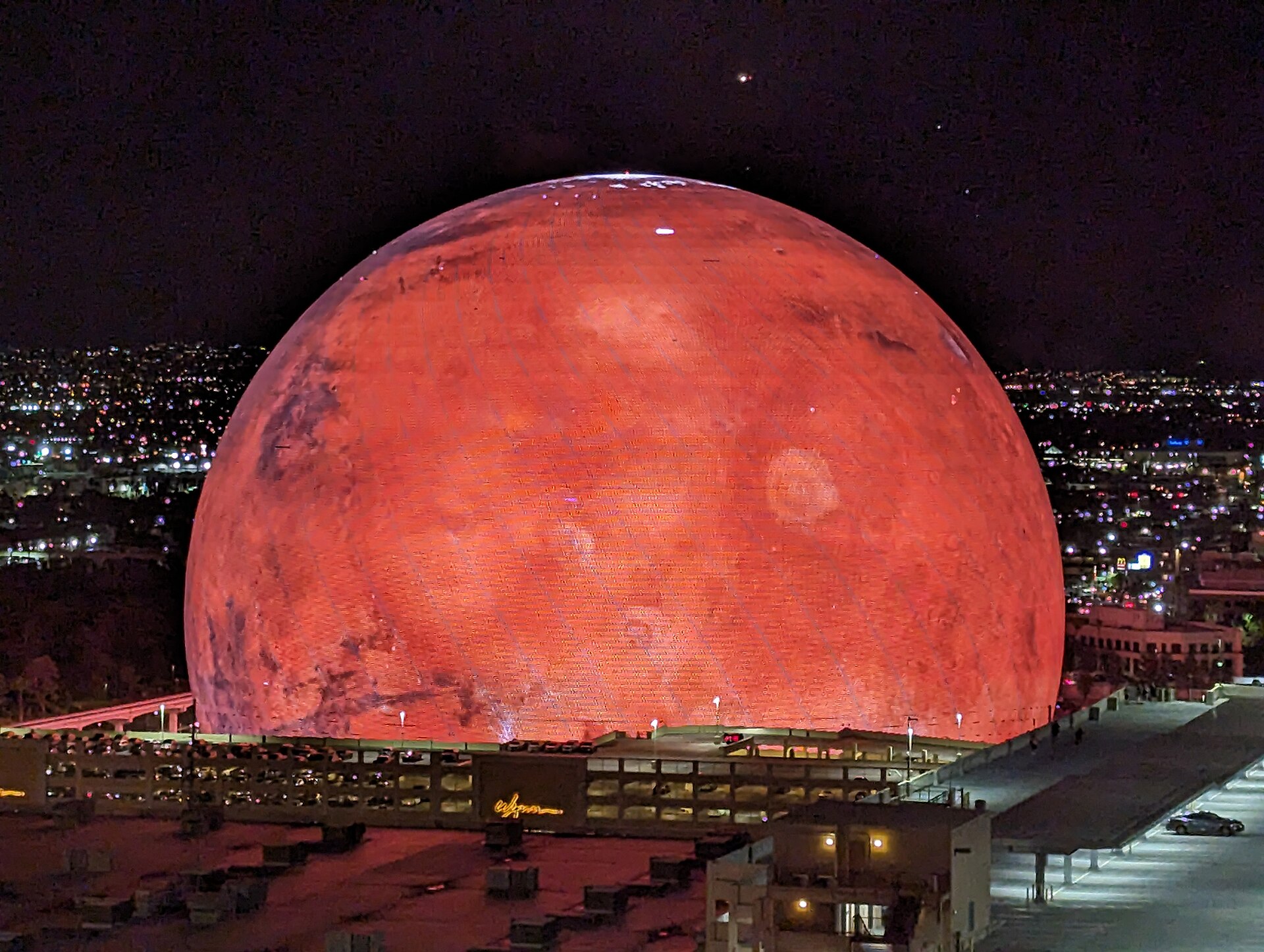
In the weeks after the July 4, 2023 debut, the Exosphere ran through the solar system: a blue-marble Earth, a cratered Moon so convincing it fooled late-night drivers into double-takes, and a rust-red Mars, photographed from a Harrah's hotel room in August 2023, as on this page. An astronaut drifted by for scale. It was the perfect opening argument: this building can be anything round, including the originals.
Why planets suit it
Every other display fights the shape a little; planets surrender to it. The LED pucks sit on a true sphere, so a planet needs no distortion correction, and at 366 feet the Moon display is roughly the apparent size of the real Moon seen from much too close. Earth remains the Exosphere's most requested rotation and its default postcard.
See them
The planets rotate through the lineup year-round. Our photos page has the Moon and Mars in the gallery, and the display archive tracks their appearances alongside everything else the dome has been.
Quick answers
When did Sphere first show Earth and the Moon?
Summer 2023, in the first weeks after the Exosphere's July 4, 2023 debut, alongside Mars and the giant eyeball.
Is the Sphere Moon bigger than the real Moon?
In the sky, no; in apparent size from the street below, it feels far bigger. The display is 366 feet tall and a few hundred feet away, which is why it stops traffic.