
Sphere Guide
Is the Sphere 3D?
No glasses. No headset. And yet things fly at your face. Here is the trick.
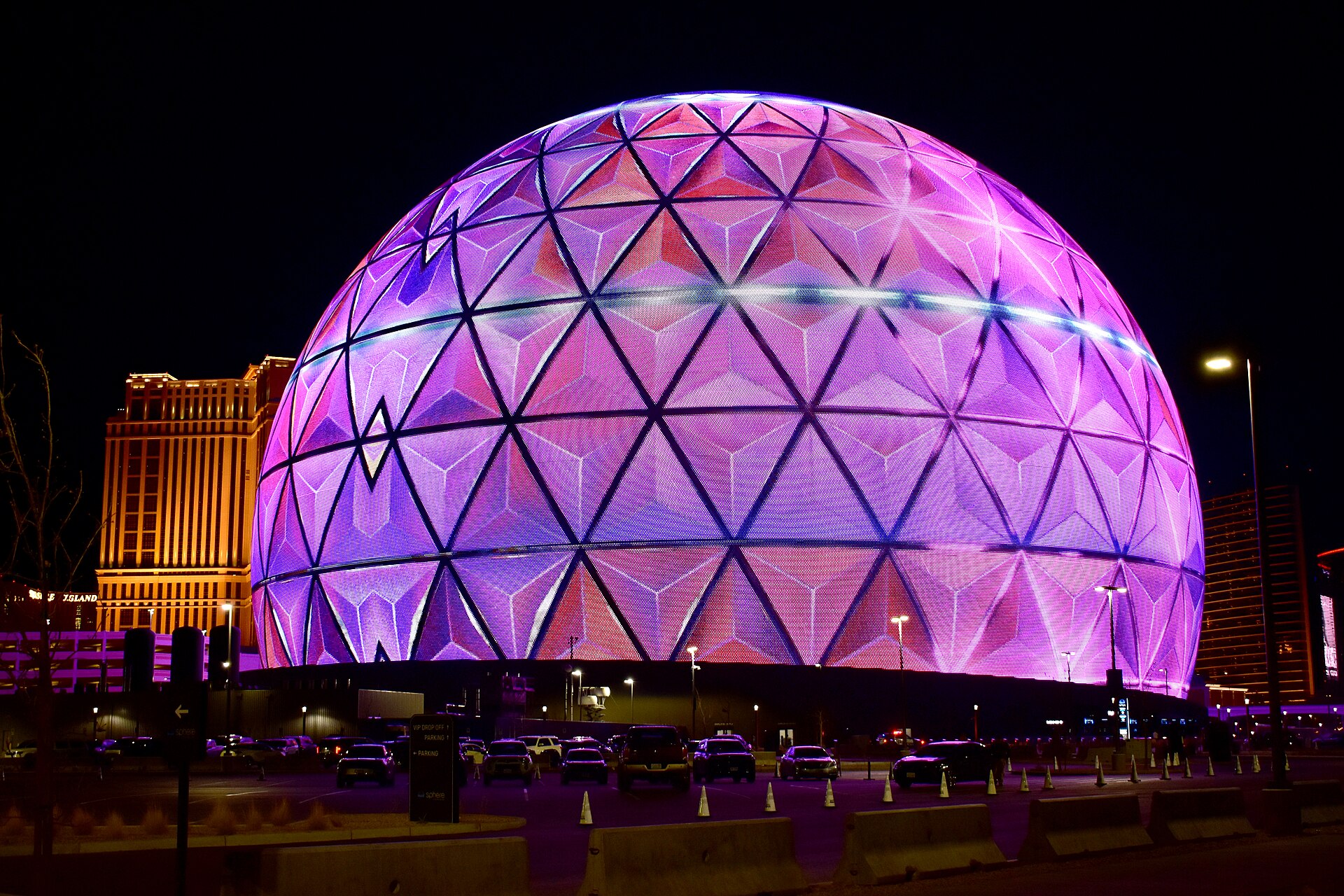
Not 3D, and that is the point
Stereoscopic 3D, the cinema kind, works by showing each eye a slightly different image through glasses. Sphere uses none of that: one single image, no glasses, nothing on your face. The depth you perceive comes from older, stronger cues: the image wraps into your peripheral vision, objects move across it with true parallax, and sound arrives from the exact direction of the thing you are looking at. Your brain assembles depth the way it does in real life, because most of the inputs match real life.
Why it feels deeper than 3D
Glasses-based 3D shrinks the world to a window and dims it. Sphere does the opposite: the window disappears, the image is brighter than cinema, and it extends past the edge of your vision where depth perception is most convincing. Add haptic seats and wind, and a flying sequence stops looking like an effect and starts feeling like weather happening to you. Visitors regularly describe it as VR without the headset, shared with 18,600 people instead of worn alone.
Quick answers
Do you wear 3D glasses at Sphere?
No. There are no glasses or headsets. The depth comes from the screen wrapping into your peripheral vision, the 16K resolution and sound aimed at your seat.
Is Sphere like VR?
It achieves a VR-like wrap without a headset, and you share it with the whole room instead of wearing it alone. Nothing is strapped to your face, and you can always see the real stage at the base of the image.