
Sphere Guide
Does the Sphere Move?
Short answer: the building never budges. Your inner ear disagrees, and here is why.
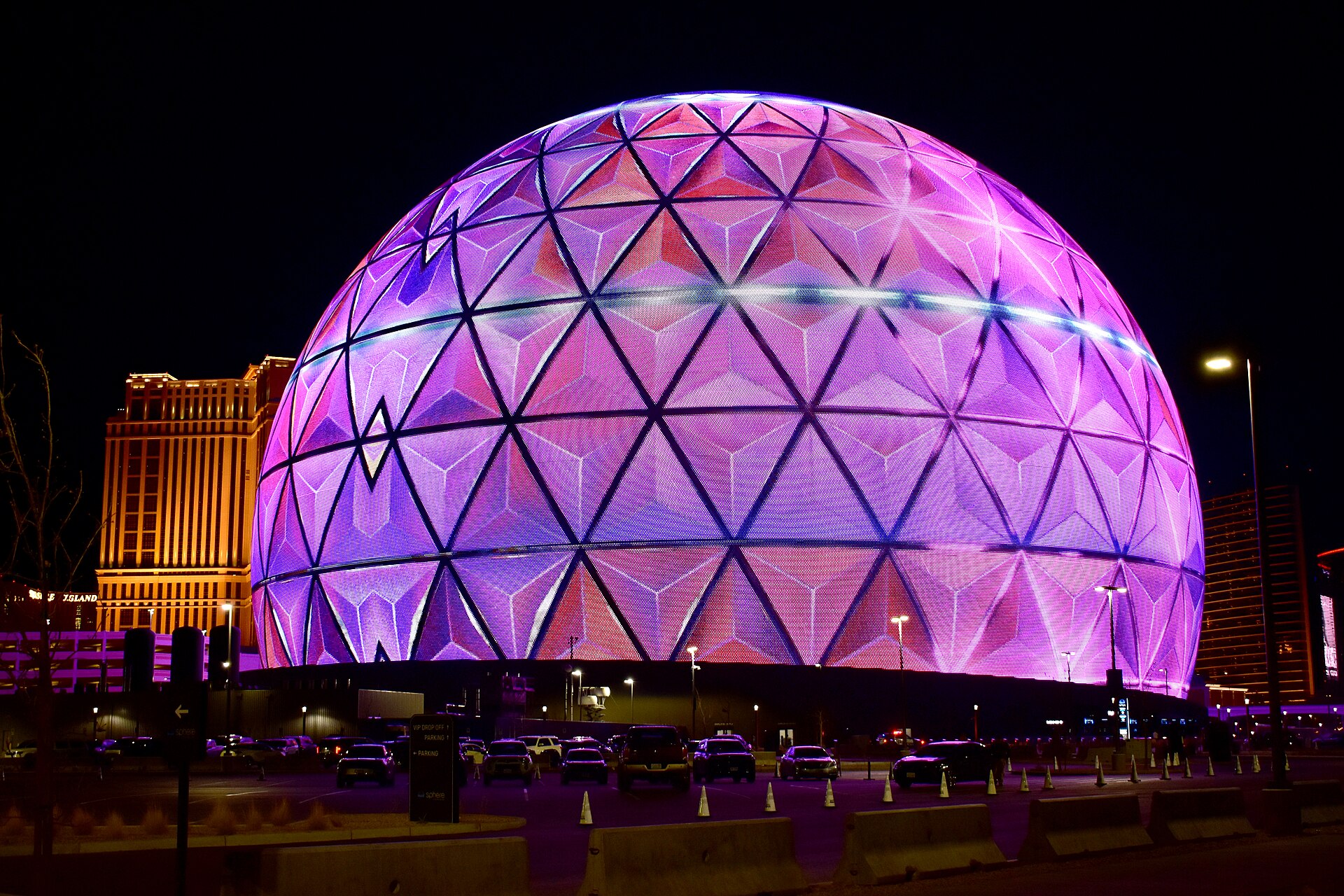
The building: perfectly still
Sphere is a fixed, 366-foot structure anchored to its foundations. Nothing rotates, nothing tilts, and the seating bowl does not move. If you stood outside during the most violent tornado sequence in The Wizard of Oz, you would see a calm, glowing ball.
So why does it feel like flying?
Three systems conspire. First, the wraparound screen fills your peripheral vision, and your balance system trusts peripheral motion cues, so when the imagery flows, your body reads it as self-motion, a trick called vection. Second, 10,000 haptic seats rumble and pulse in sync with what you see. Third, infrasound, bass below the range of hearing, presses on your chest. Together they are convincing enough that audiences sway, duck and grab armrests during flying scenes.
What about motion sickness?
A small number of visitors do feel it, usually during the most aggressive motion sequences in the films. The gentlest setup is a center seat with the screen's horizon at eye level (center 300s for films), and the fix in the moment is simple: look at a fixed point like the stage edge, or close your eyes; the sensation stops instantly because the building was never moving.
Quick answers
Does the Sphere rotate?
No. The building is a fixed structure. The sensation of movement comes from the wraparound screen filling your peripheral vision, plus haptic seats and infrasound.
Can Sphere make you motion sick?
It can if you are sensitive, because moving imagery in your peripheral vision can fool your balance system. Center seats are the gentlest choice, and looking away or closing your eyes resets the feeling instantly.